Lead Paint Removal in Hayward

Hayward has 52,243 homes, and 62.1% of them were built before 1980, according to the 2020-2024 American Community Survey. That is the backdrop for Hayward Lead Paint Removal, which arranges testing, removal and abatement for older houses, duplexes and apartments. The 1950s alone produced 13,199 of those homes, and renters live in 42%.

Lead is regulated by two agencies in California. CDPH handles certification of inspectors, risk assessors and abatement crews under Title 17, and the EPA handles renovation firms since the state left that program to it. Buildings from 1978 on are exempt from both.

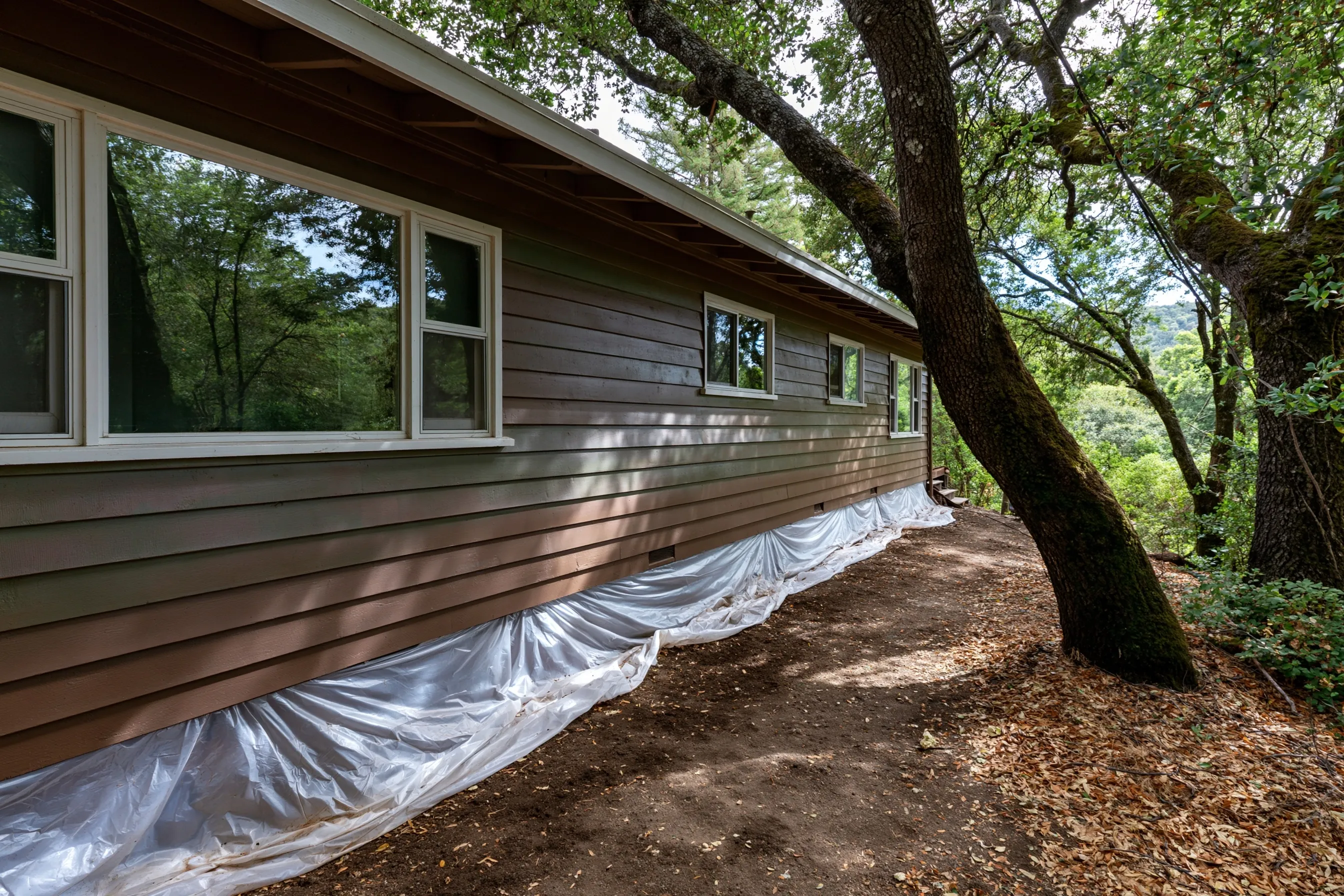
Long ranch house with horizontal wood siding under oak trees, plastic sheeting spread on the ground along the wall
Lead paint inspection and testingExterior lead paint removalLead paint window and door removalLead-safe renovation and remodelingLead paint encapsulationRental property lead paint work

Lead paint services

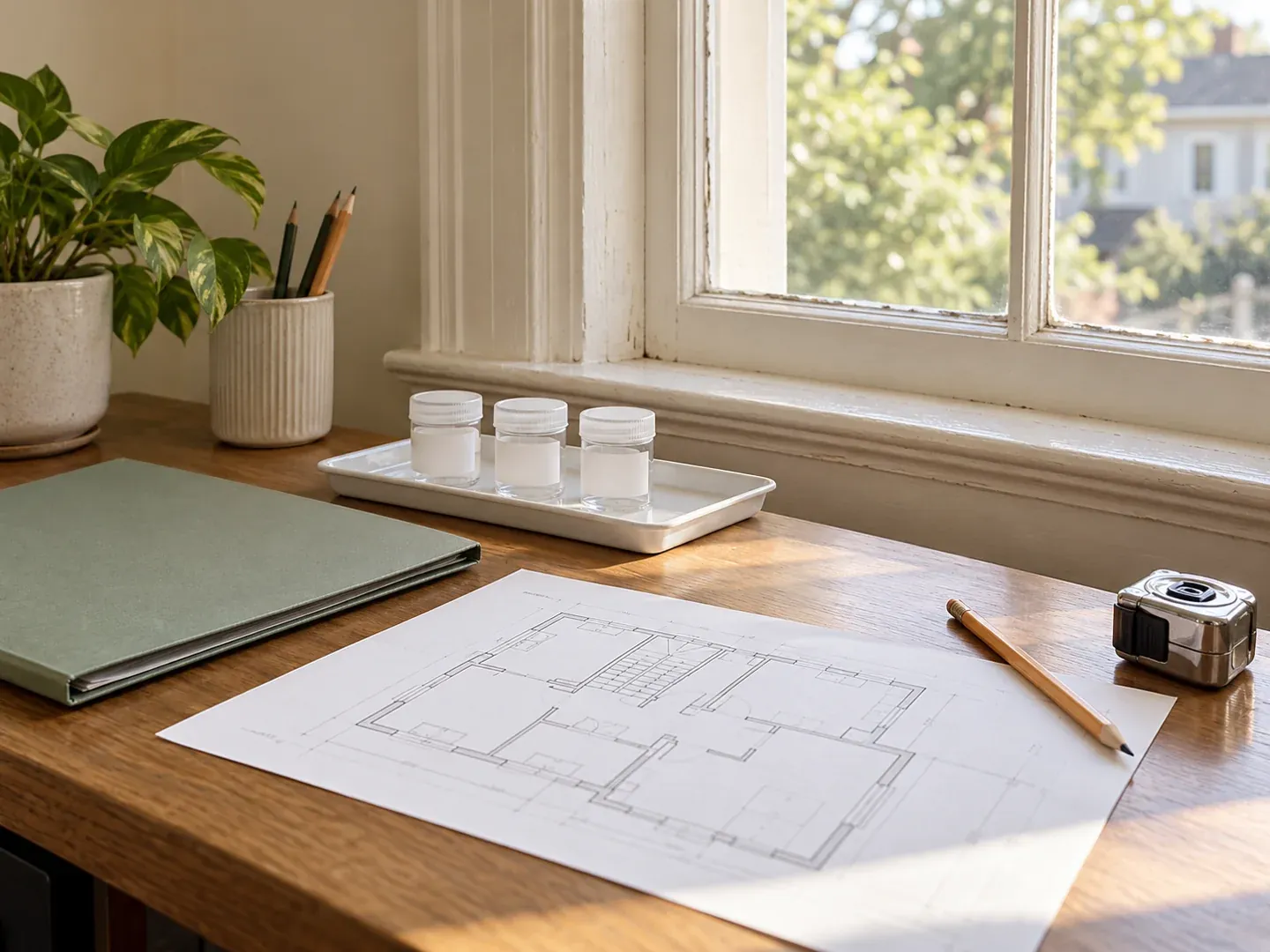
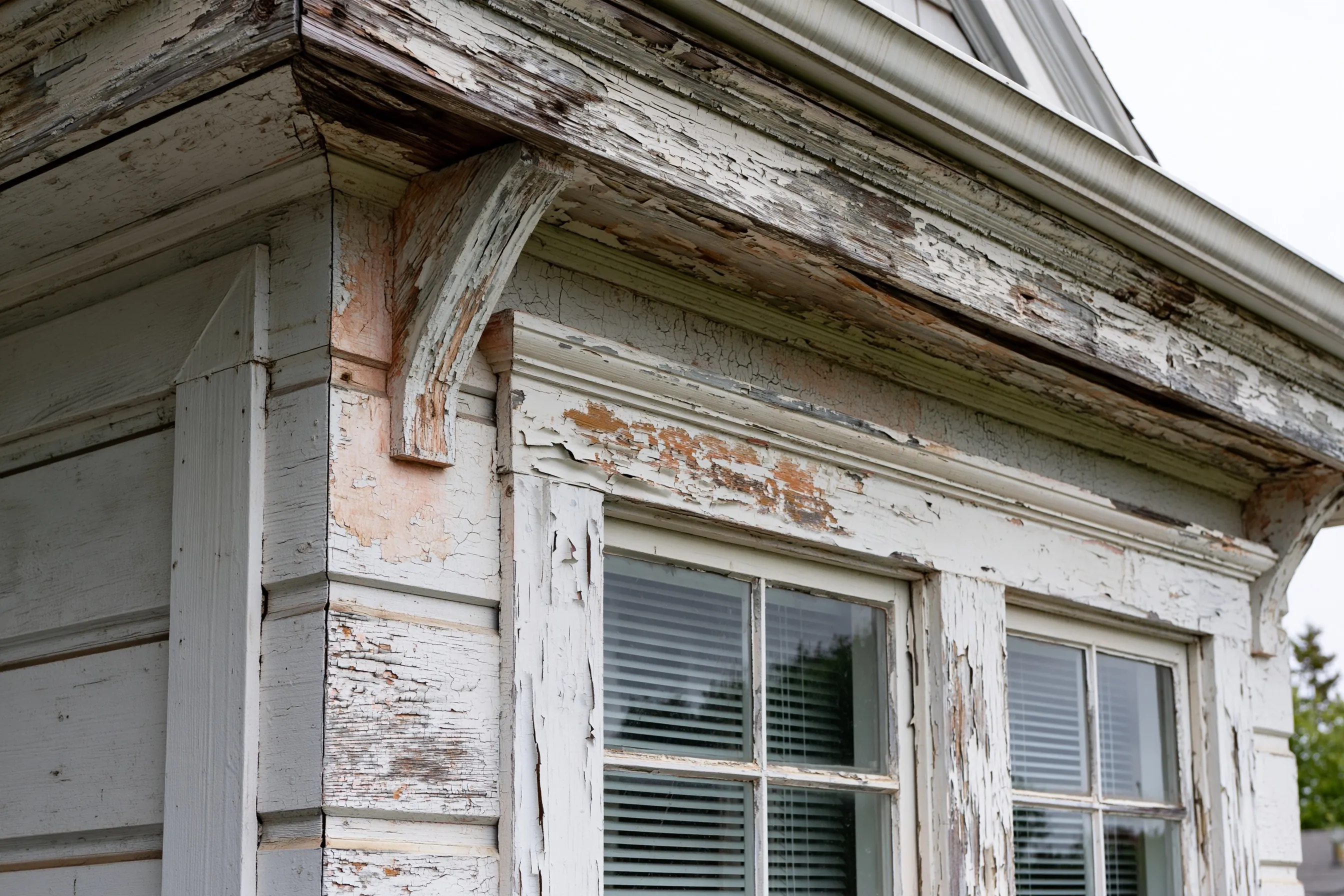
Floor plan, sample containers and a tape measure on a desk beside a painted windowClose-up of an eave, fascia and window trim on an older wood-sided house with layers of white paint peeling and cracking

Lead paint inspection and testing

Alameda County’s Healthy Homes Department names a State-certified inspector or risk assessor as the surest way to learn whether a home or yard has lead hazards. The inspection locates lead-based paint, the risk assessment weighs dust, soil and failing paint, and a CDPH Form 8552 report records both and decides what happens next.

Exterior lead paint removal

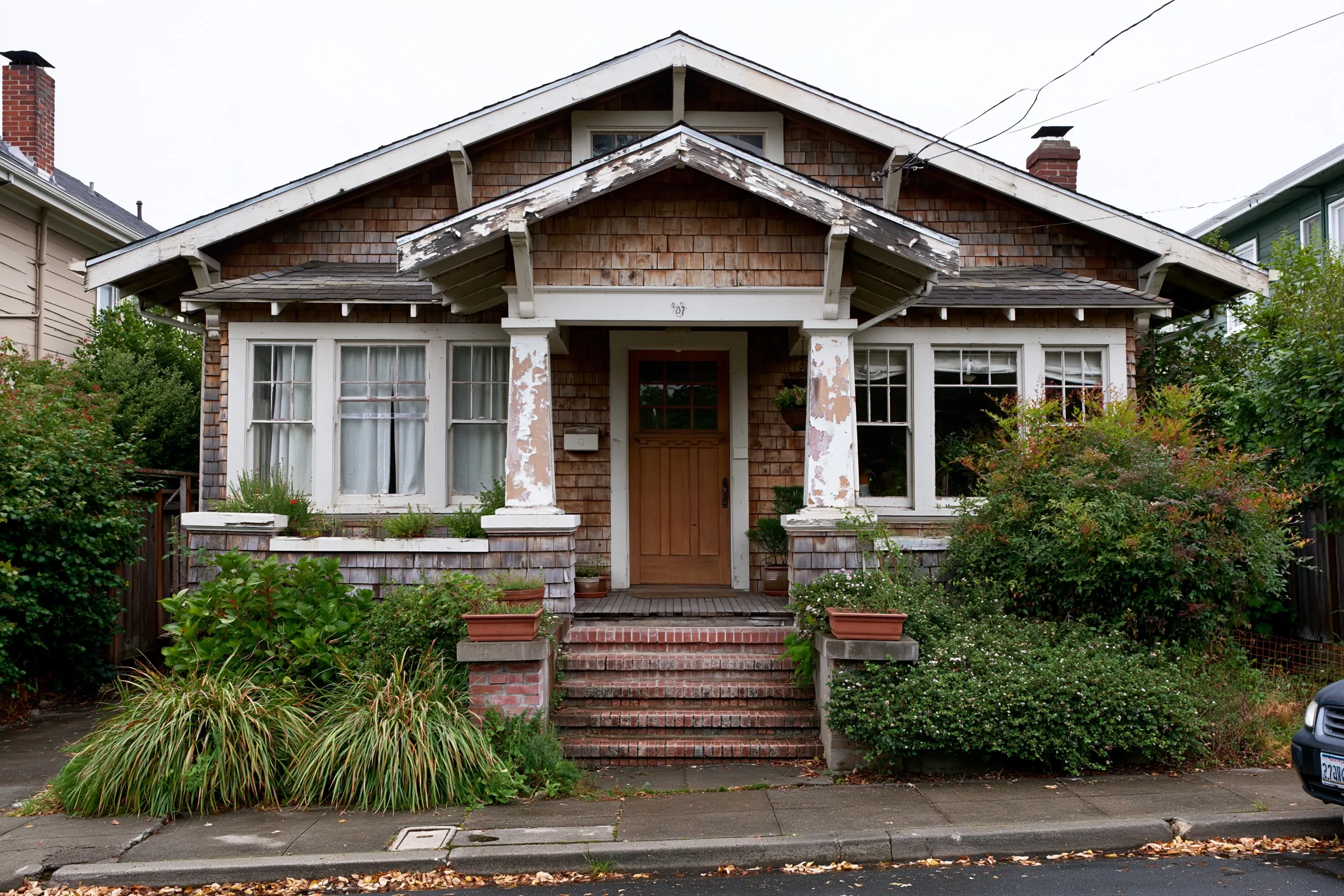
Hayward’s 1950s houses can have old coats on stucco, wood siding, eaves, fascia and trim. Ground sheeting and wall containment go up before scraping, because California treats uncontained disturbance of lead paint as a hazard, and an abatement crew files CDPH notice ahead of the job.

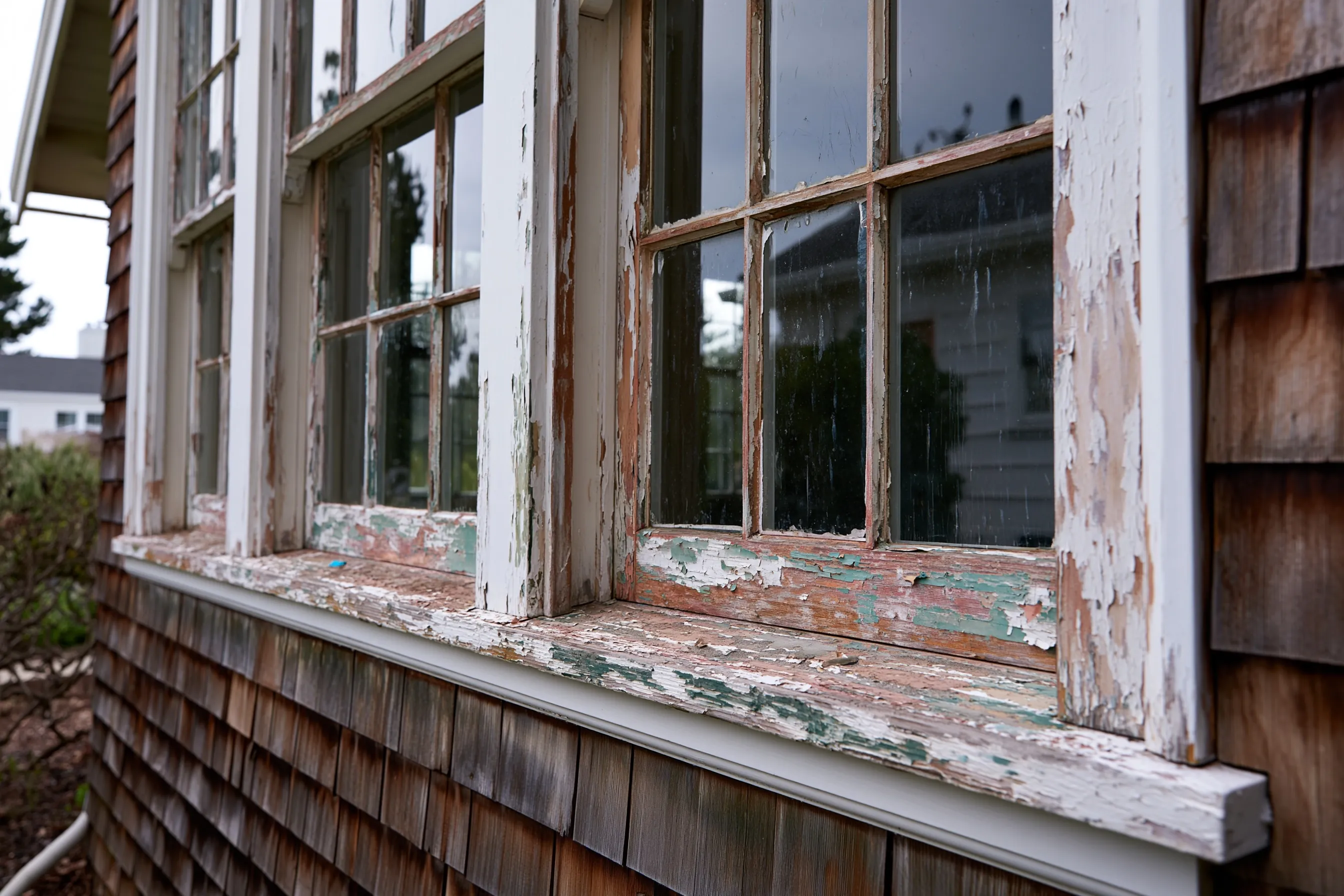
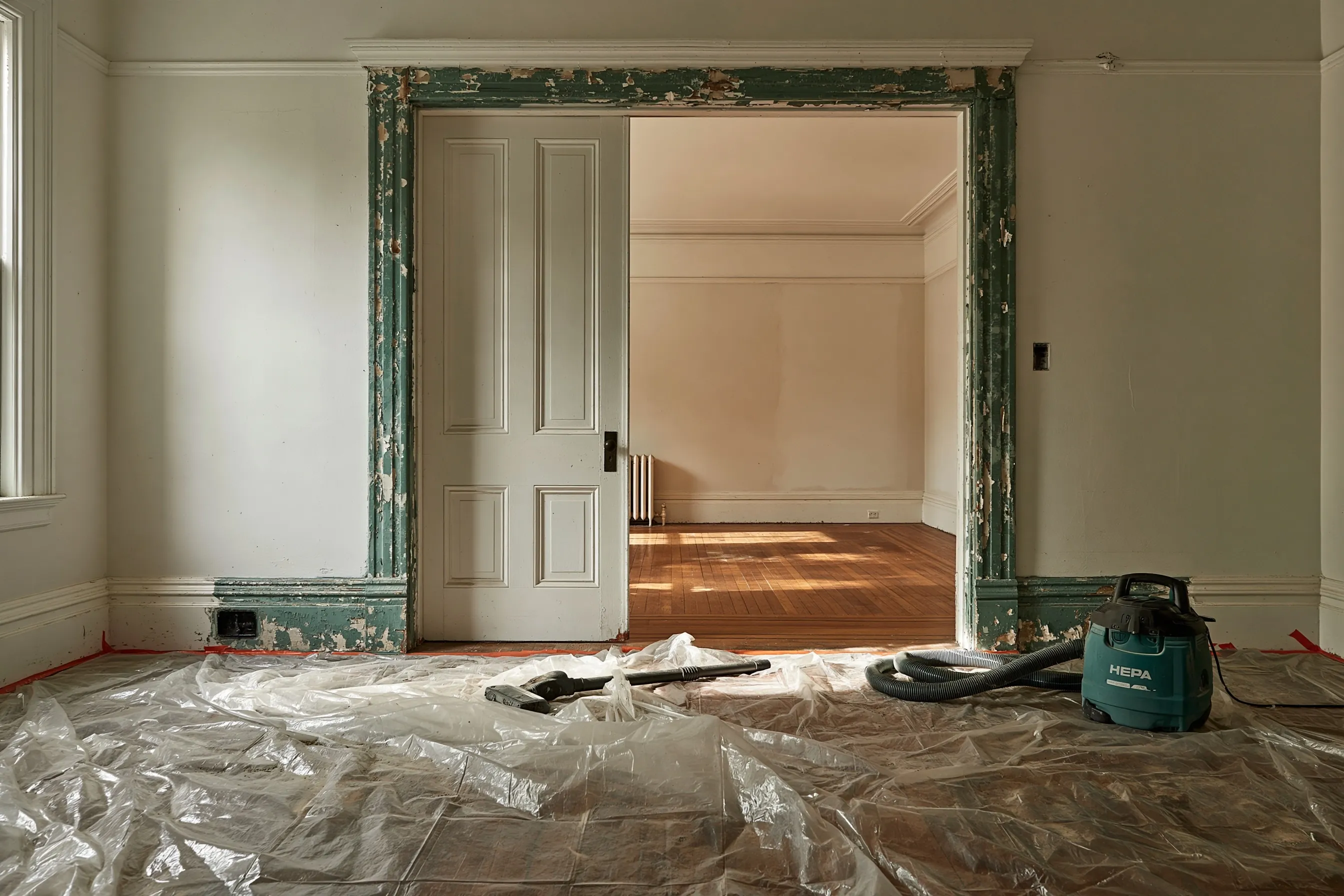
Old divided-light wood windows with flaking paint on the sills and sashes, set in wood shingle sidingInterior door frame and baseboard with layered old paint, room prepared with plastic sheeting

Lead paint window and door removal

A building permit is required in Hayward to replace or add windows, sliding glass doors or skylights, and the EPA counts any window replacement in a pre-1978 home as regulated work. Original sashes can instead be stripped and restored with the paint contained.

Lead-safe renovation and remodeling

Remodeling a pre-1978 kitchen is not abatement, but demolition and sanding grind old paint into dust anyway, so EPA work practices apply: a certified firm and renovator, sealed rooms, a cleaning check. CDPH is still drafting the state’s own renovation rules under SB 1076.

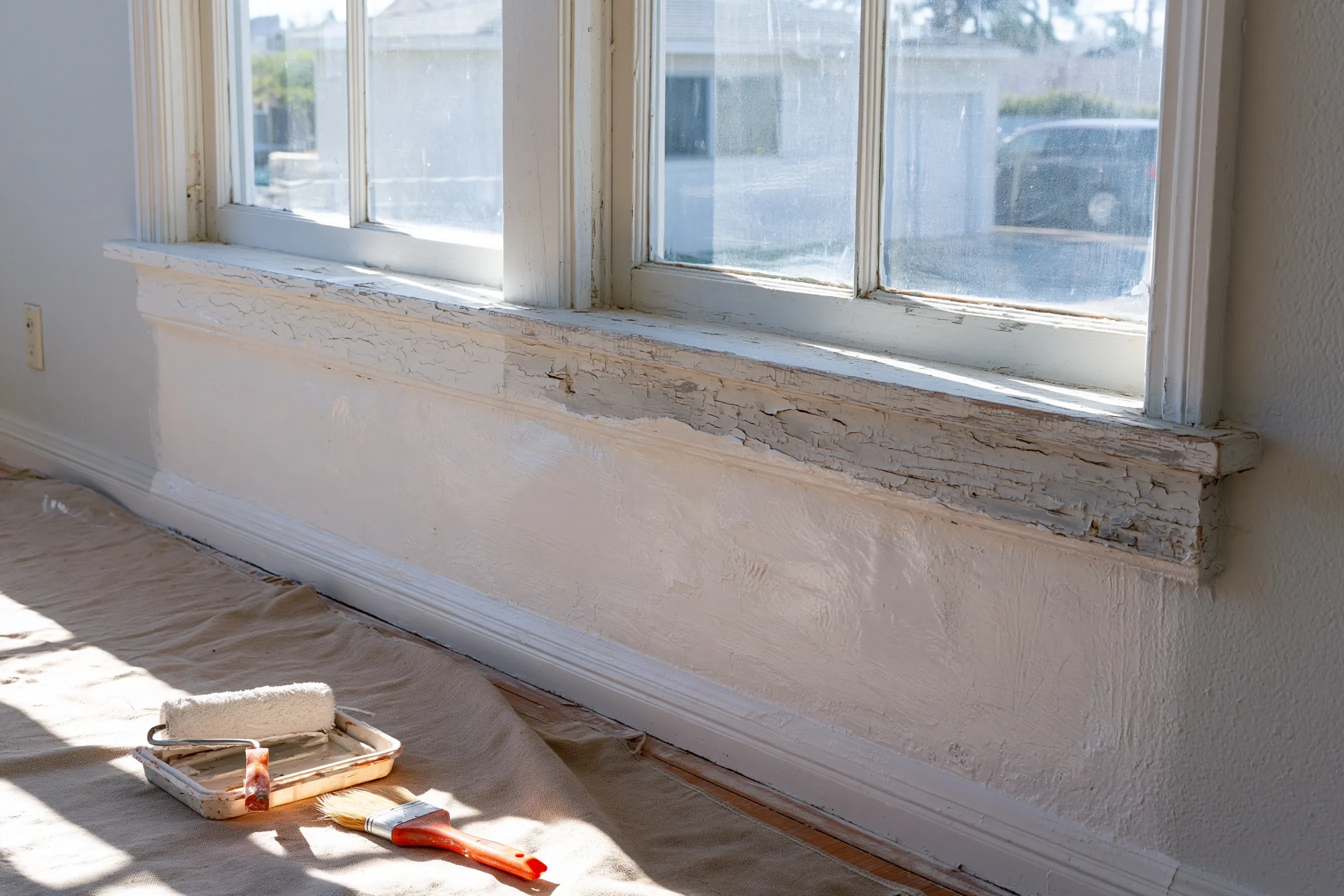
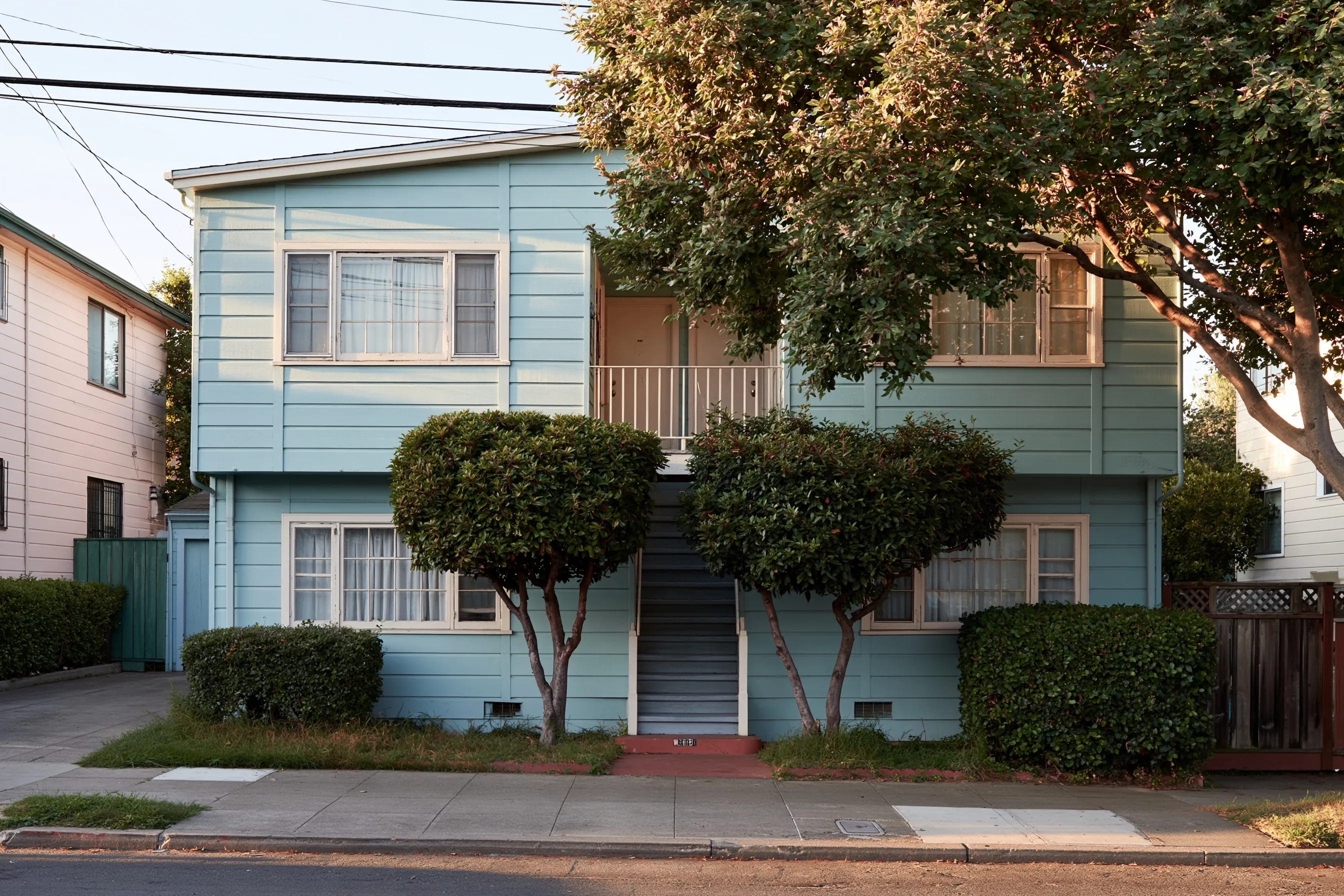
Older painted plaster wall below a cracked painted wood window sill, partly coated with encapsulant paint, tray and brush on a drop clothTwo-story apartment building with painted wood siding, wood-framed windows and an exterior stair, two trimmed shrubs in front

Lead paint encapsulation

Paint in good, well-bonded shape can sometimes be sealed or covered and left in place. The deciding factor in California is design life: 20 years or more makes it abatement, less makes it an interim control.

Rental property lead paint work

Pre-1978 rentals carry a federal disclosure for each new or renewing tenant, and paid repainting between tenants is EPA-regulated unless it is minor repair under the EPA size limits. Hayward runs a rental inspection program that does not test for lead. Testing, repairs and record-keeping are where we help.

Lead paint testing and removal costs

Each line is hired labor plus materials and any lab fees for a typical job in Hayward, San Leandro and San Lorenzo, one line per job size. A small, easy job sits near the low end. The open top end is for more painted parts, high or detailed work, rotten wood found under the paint, or a failed clearance test that means cleaning again.

Lead paint inspection and testing

  • Test of the rooms or parts a project will touch$300 – $700+
  • Whole house up to 2,500 sq ft$350 – $975+
  • Large house over 2,500 sq ft$575 – $1,250+
  • Risk assessment with dust and soil samples, one house$700 – $2,000+
  • Clearance test after lead work$250 – $700+
What is included

Readings or paint chips from each type of painted surface, or dust and soil samples for a risk assessment, and a written report of what tests positive and what does not. Rush reports and extra lab samples cost more.

Get a free quoteSee an example project

Exterior lead paint removal

  • Eaves and fascia on one side, about 100 sq ft$950 – $2,350+
  • Porch and railings, about 150 sq ft$1,600 – $4,500+
  • One-story house, peeling trim, eaves and siding or stucco$5,750 – $16,250+
  • Two-story house$11,500 – $34,500+
What is included

Plastic on the ground and around the wall, loose paint misted and scraped or stripped from eaves, fascia, trim, siding and stucco, waste bagged, primer and paint on the bare wood, and a check for chips and dust at the end. Rotten wood, stucco repair and scaffolding cost extra.

Get a free quoteSee an example project

Lead paint window and door removal

  • One window replaced$475 – $1,425+
  • About 4 windows replaced$1,650 – $4,900+
  • About 10 windows replaced$4,800 – $14,400+
  • One or two old windows or doors stripped and restored, originals kept$700 – $2,050+
What is included

Old windows or doors taken out with plastic inside and out and new units fitted, or the originals stripped, repaired and repainted, then cleanup and a check of the sills. The building permit fee, custom sizes and period doors cost more.

Get a free quoteSee an example project

Lead-safe renovation and remodeling (add-on)

  • Small repair, one room$500 – $1,250+
  • Kitchen or bathroom remodel$1,550 – $4,500+
  • Several rooms or a whole floor$3,800 – $10,750+
What is included

What lead-safe work adds to a remodel, repair or repaint in a pre-1978 home: rooms sealed with plastic, old paint misted before it is disturbed, HEPA vacuuming, cleaning each day and at the end, a cleaning check and waste bagged. The project itself is priced separately.

Get a free quoteSee an example project

Lead paint encapsulation

  • About 300 sq ft of trim and walls sealed, one room or the outside trim$1,400 – $4,100+
  • About 1,000 sq ft sealed, several rooms or one outside wall$4,600 – $13,800+
  • One room's walls covered with new drywall, about 350 sq ft$3,200 – $7,750+
What is included

Loose paint misted and scraped, then a coating made to seal lead paint over sound walls and trim, or new drywall over the walls. Work meant to last 20 years or more adds a written plan and a clearance test.

Get a free quoteSee an example project

Rental property lead paint work

  • Lead inspection, duplex or small apartment building$800 – $2,050+
  • One unit: peeling paint fixed (about 100 sq ft), cleaned and tested$1,800 – $4,850+
  • One unit: paint fixed and about 8 old windows replaced, with clearance$5,600 – $16,500+
What is included

Testing of a duplex or small apartment building, or one unit’s peeling paint repaired the lead-safe way with cleaning and a clearance test. The top line also covers about eight old windows replaced.

Get a free quoteSee an example project

Ranges are 2026 estimates, not quotes. Your written estimate is free and comes after we have seen the home.

Our process

01

Check the build year

The federal line is 1978, when lead-based paint stopped being sold for homes. Count from the original structure and ignore the newest kitchen or window set. A house from 1978 or later has no disclosure duty and needs no certified renovator.

02

Test with a certified inspector

Untested pre-1978 paint is presumed to be lead paint under the EPA rule, so testing is optional, though it shows which surfaces to protect and which to leave. In California the paid inspection comes from a CDPH-certified Inspector/Assessor, who may not abate the same structure afterward.

03

Choose a route

The report, together with what you want from the house, picks the route. Stripping or sealing for good, holding the hazard back for a few years, or renovating around the lead are all possible, and each carries different paperwork and crews.

04

Notice, containment, clearance

Containment is mandatory for any lead work, and nothing visible may be left behind. Abatement adds a Form 8551 notice, posted on site and in CDPH’s hands five days or more before work begins, and ends with a clearance inspection.

Postwar tracts and older Hayward housing

The ACS decade counts show how the city’s housing was added. The 1950s contributed 13,199 homes, the 1940s 2,668, and 1939 or earlier 2,109. Taken together, 17,976 homes (34.4%) predate 1960 and 9.1% predate 1950. A tract house of 1955 and a bungalow of 1925 may both hold old paint, in different places: stucco and fascia on one, painted siding and original sashes on the other.

Hayward’s 2021 housing and community development report, issued as a draft for comment, cites the Alameda County lead program for roughly 34,700 pre-1978 housing units in the city and says the city’s rehabilitation work on pre-1978 properties is tested for lead and carried out with lead safe work practices. For comparison the ACS puts pre-1980 units at 32,440, a count on a slightly different cutoff.

Rules that touch older Hayward houses

Under Hayward’s Historic Preservation Ordinance, a building permit application for a structure at least 50 years old, or one inside a historic district, goes through a screening that decides whether a historical alteration permit is needed. Under section 10-11.050, residential properties developed under a tentative tract map after 1946 are exempt from the historical permits. Maintenance and repair that leave design, material and appearance as they were are not prevented. The Planning Division can tell you whether an address is affected.

Lead requirements in Hayward come from Title 17, State Housing Law and the federal EPA rules. Alameda County’s Healthy Homes Department adds owner guidance, a list of local firms certified under the EPA renovation rule and a lead hazard repair grant program, and it decides who qualifies.

Hayward and nearby Alameda County communities

Two neighbors have their own pages and older housing than Hayward overall: San Leandro, where 52.5% of homes predate 1960, and San Lorenzo, at 72.9%.

Frequently asked questions

Who certifies lead inspectors and abatement crews in California?

CDPH runs the certification through its Lead-Related Construction program and posts lists of people whose certification is current. Inspectors/Assessors handle inspections and risk assessments, Project Monitors can clear a job, and certified Supervisors and Workers abate. The EPA certifies renovation firms instead.

What lead paint disclosure comes with a Hayward home sale?

Sellers of pre-1978 houses owe the buyer three things: the EPA pamphlet, whatever lead reports exist and a Lead Warning Statement. Ten days to test follow, with California specifying a CDPH-certified Inspector/Assessor as the tester. The state transfer disclosure form asks about known lead-based paint too.

How does California define lead-based paint?

At 1.0 milligram of lead per square centimeter, or 0.5% by weight, Title 17 calls paint lead-based. Paint below that still contains lead and still makes dust, so reports list each component and not one verdict for the house.

Is there a Hayward ordinance on lead paint?

Lead requirements come from Title 17, State Housing Law and the federal EPA rules, while Hayward’s permit and historic rules apply to the building work around them.

Can lead paint simply be painted over?

Sometimes, but not with ordinary paint. An encapsulant is formulated to bond to old paint and hold it in. It fits sound paint on surfaces that do not rub or get wet; loose paint must come off first, disturbing lead. A test helps you decide.

Request a free lead paint removal quote

What is the street address, and do you know the year of construction? Describe the plan (repaint, remodel, windows, sale, re-rental), mention any child under six at home, and list the lead paperwork you hold. We'll get back to you soon with an estimate or any questions we have. Estimates are free and there's no obligation.

Call (510) 576-5907

Call (510) 576-5907